AMD Engineering LLC

Featured Projects

A selection of transportation engineering and traffic design projects delivered across Virginia, Maryland, and Washington, DC.

AMD Engineering LLC transportation engineering project

* Projects managed and/or designed by principals while at previous firms

Virginia Department of Transportation (VDOT)
Signing & Pavement MarkingRoadway LightingVDOT

I-81 Widening CIP, Exits 143–150

Signing, Pavement Marking and Partial Interchange Lighting

AMD Engineering is the signing and pavement marking and lighting designer for the $361.6 million I-81 Widening CIP between Exits 143 and 150 in Roanoke and Botetourt Counties. The project adds a third lane in each direction, replaces eight bridges, installs new sound walls, and upgrades ramps and intersections, including major modifications at Exit 150.

AMD inventoried existing overhead and ground-mounted signs and developed the signing and pavement marking plans for the corridor in compliance with the MUTCD and VDOT standards. AMD also designed partial interchange lighting under VDOT IIM-TE-390 and IES RP-8, including photometric and voltage drop calculations, targeting ramp terminals and decision points to improve nighttime visibility while reducing energy use and light trespass. Plans were developed through VDOT ProjectWise with independent QA/QC of the full plan set.

Virginia Department of Transportation (VDOT)
Traffic Signal DesignITS & CCTV DesignVDOT

VDOT Richmond District On-Call

CCTV, RRFB and Traffic Signal Design

Under a multi-year traffic engineering and ITS on-call with VDOT’s Richmond District, AMD Engineering was part of the design team for a turn-key CCTV program of 13 camera sites, about $3 million in construction, using independent third-party plan review, and designed two of the sites in Dinwiddie County from aerial imagery. Aerial flights at each site captured line-of-sight photos to set tree clearing limits and keep camera views clear, and the design covered power and communications integration.

Other task orders include three rectangular rapid flashing beacon (RRFB) crossings in the Fredericksburg area with ADA-compliant curb ramps and temporary MOT, with plan bases built from aerial imagery and VA-811 utility markings instead of survey; and a traffic signal replacement in Caroline County with updated yellow change and red clearance intervals.

Virginia Megaprojects
Owner’s ReviewITSVDOT

Virginia MegaProjects: PSS, ESS, and GEC

Traffic Engineering Subject Matter Expert

VDOT: Engineering Support Services for the NOVA MegaProjects Office

AMD Engineering provides technical guidance and oversight on behalf of VDOT for the expanded express lanes program in Northern Virginia, a program of about $1 billion in construction. Mr. Newberger serves as traffic engineering subject matter expert, reviewing traffic signal, signing and pavement marking, ITS and communications, lighting and MOT designs for compliance, constructability and safety, and coordinating with VDOT staff, concessionaires and consultants.

Capital Beltway Express Lanes GEC*

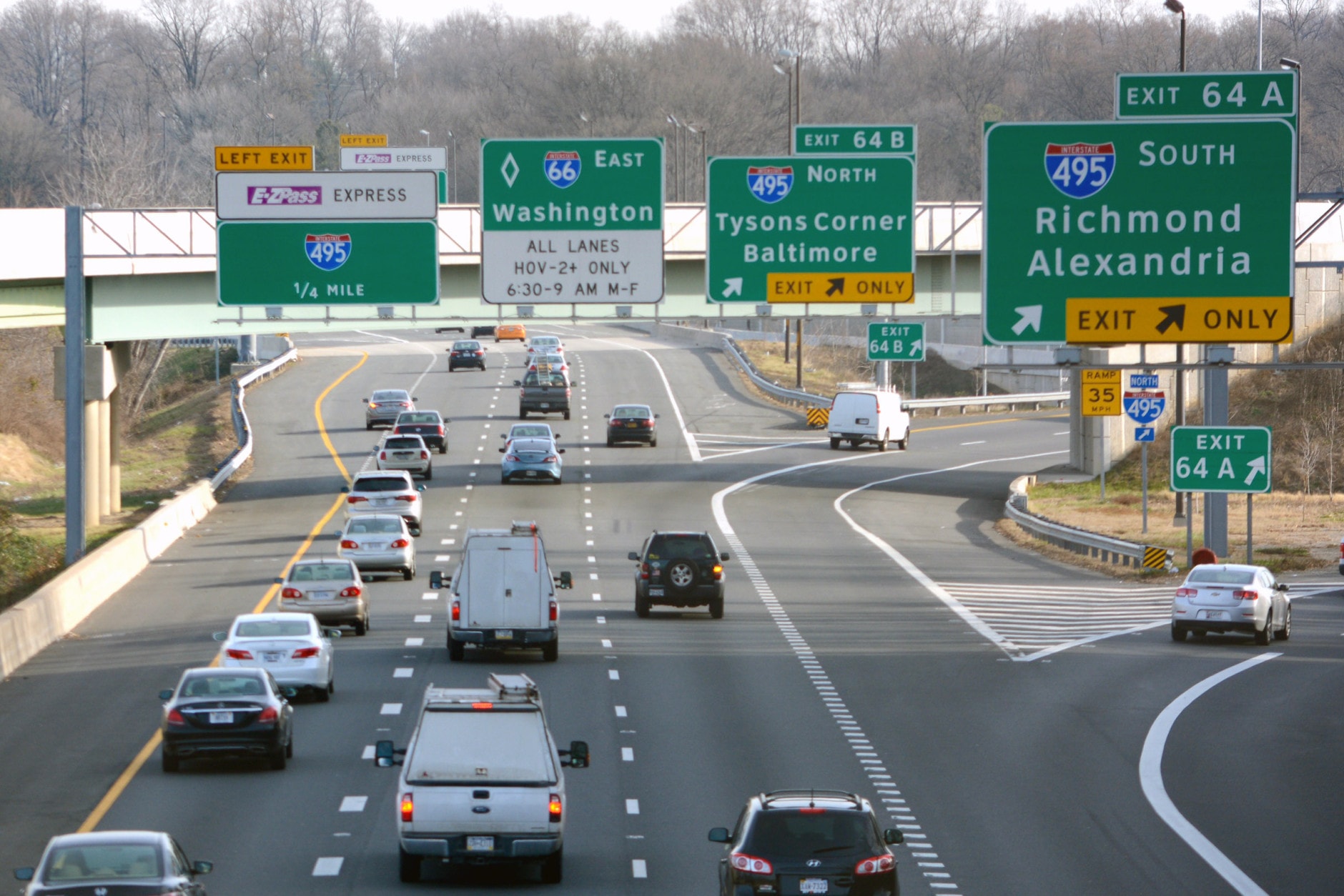
Mr. Newberger oversaw the review of all traffic-related design for the I-495 Express Lanes in Fairfax, VA, on behalf of VDOT. Oversight included review of signal installation and modification, temporary traffic signal, signing and pavement marking, intelligent transportation systems, and maintenance of traffic plans.

Dulles Corridor Metrorail (Silver Line) Extension*

Mr. Newberger reviewed the maintenance of traffic (MOT) plan for sections of the Dulles Metrorail Extension for VDOT. The Dulles Corridor Metrorail Project was a new 23-mile, $5 billion rail line extending service from the existing Orange Line at the East Falls Church Station in Arlington County to Route 722/Ryan Road in Loudoun County, one of the most traffic-congested suburbs of Washington, DC. Construction caused significant changes in traffic patterns on Routes 7 and 123, the section for which Mr. Newberger reviewed the MOT plan. He also reviewed construction staging, phasing, and temporary traffic control plans, including traffic detours and coordination of lane closures.

I-95/395 Express Lanes*

Mr. Newberger provided technical guidance for the design team on issues ranging from traffic signal design, signing and pavement marking, ITS/communications, and maintenance of traffic during the ready-for-estimate stage of the I-95 Express Lanes project for VDOT. The overall project scope involved converting the existing reversible high-occupancy vehicle (HOV) lanes on I-95 and I-395 to high-occupancy toll (HOT) lanes from Stafford, VA, to the edge of Alexandria, VA, a 45-mile segment of I-95. Mr. Newberger prepared an independent estimate of ITS, lighting, signing, traffic signal, and striping on I-95 through Fairfax, Prince William, and Stafford counties, VA, for use by the Federal Highway Administration. He assisted with the development of technical requirements and scope of work for the I-395 HOT lanes and the development of an existing conditions and feasibility report for the redevelopment of the northern end of the I-395 HOV corridor, which included the assessment of gates, cameras, detectors, signage, power, communications, and all other ITS infrastructure.
I-66 Express Lanes Outside the Beltway
Roadway LightingVDOT

I-66 Outside the Beltway Express Lanes

Partial Interchange Lighting and Safety Study

Partial Interchange Lighting

AMD Engineering was responsible for providing design of nine miles of Partial Interchange Lighting LED highway lighting for both the general purpose and express lanes along I-66 in Prince William County and Fairfax County, VA. Lighting analysis was performed in accordance with the VDOT Traffic Engineering Design Manual and IES RP-8 requirements and utilized AGi32 software for lighting analysis. The I-66 Express Lanes project was the first project in the state to incorporate VDOT's IIM-TE-390 lighting design criteria, which eliminates the use of continuous highway lighting and replaces it with Partial Interchange Lighting. Of the three engineering firms working on the lighting analysis for Partial Interchange Lighting of 22.5 miles of the project, AMD Engineering was the first to submit plans utilizing the IIM-TE-390 criteria.

AMD Engineering was well versed in the then-new RP-8 updates and was requested to lead the charge on how to best implement the new requirements of IIM-TE-390 that add new challenging constraints across the entire 22.5-mile project. AMD Engineering worked closely with VDOT personnel from the local district as well as central office to gain concurrence and approval of the proposed lighting design while meeting or obtaining waivers due to additional constraints added by the IIM.

Safety Study

In May 2019, VDOT released IIM-TE-390 which established a new direction for the warranting and installation of lighting systems on VDOT roads. VDOT determined that installing and maintaining continuous highway lighting was no longer cost effective and therefore wanted to develop criteria in which only Partial Interchange Lighting would be installed. Mr. Newberger was approached by the I-66 Express Concessionaire to lead a team of engineers across three engineering firms to develop a study determining the appropriate level of lighting for the project as well as to establish standard limits for partial interchange lighting along all 22.5 miles of the project. Mr. Newberger also worked with VDOT personnel from the local district as well as central office to gain concurrence and approval of the study. This study was the first of its kind in Virginia and has been discussed as the basis for further VDOT implementation throughout the state.

Virginia Department of Transportation (VDOT)
Roadway LightingVDOT

Hampton Roads Bridge-Tunnel

Lighting Analysis and Design

HRBT Portal Island Site Lighting

The Hampton Roads Bridge-Tunnel (HRBT) Expansion Project includes the design and construction of improvements to the I-64 corridor between Settlers Landing in Hampton and I-564 in Norfolk. The project increases capacity throughout the 10-mile corridor and adds a new bridge-tunnel complex approximately 3.5 miles long (1.9 miles for the tunnel and approaches) that runs generally parallel to the existing Hampton Roads Bridge-Tunnel. Two of the existing portal islands are being expanded and reconstructed to widen the corridor from two lanes to four lanes in each direction, including express lanes, with twin bored tunnels connecting the islands.

AMD Engineering is responsible for performing the lighting analysis for the island roads, island parking areas, island inspection booths, and island support building exterior perimeters and entryways for both driver and pedestrian safety in accordance with the Project's Technical Requirements, VDOT Traffic Engineering Design Manual and IES RP-8 requirements.

I-66 Express Lanes Outside the Beltway
Roadway LightingStormwater ManagementVDOT

I-66 Outside the Beltway Express Lanes*

Continuous Highway Lighting and Stormwater Management

Continuous Highway Lighting

Prior to the implementation of VDOT IIM-TE-390, Mr. Newberger was responsible for providing design for nine miles of continuous LED highway lighting for both the general purpose and express lanes along I-66 in Prince William County and Fairfax County, VA. Mr. Newberger analyzed multiple lighting pole configurations including outside only, median only, alternating outside/median, and high mast lighting configurations. Mr. Newberger developed a lighting trespass report to verify that backlight outside the ROW was minimized and, in many cases, reduced when compared to the existing HPS system.

Park-and-Ride Lighting

Mr. Newberger was responsible for providing lighting design for two new Park-and-Rides located in Prince William County, Virginia. Mr. Newberger provided lighting analysis in accordance with state and local standards including the VDOT Traffic Engineering Design Manual, IES RP-8, IES RP-20 (Lighting for Parking Facilities) and the Prince William County Design and Construction Manual (DCSM) and utilized AGi32 software for lighting analysis.

Park-and-Ride Lots (PNR)

Mr. Newberger oversaw the development of two new Park-and-Ride facilities in Prince William County, VA. The larger of the two lots is a 36-acre Park and Ride (PNR) lot located in Gainesville at the intersection of US29 and University Boulevard and is one of the largest PNR lots in Virginia, with 2,046 spaces. The second lot is a 20-acre PNR located in Manassas off Balls Ford Road and Notes Drive. The combined capacity of the PNR lots is more than 3,000 parking spaces, including additional spaces for commuter buses, kiss and ride areas, carpooling, vanpooling, local shuttles, as well as pedestrian and bicycle accommodations. Design elements included: Site/Civil Design, Autoturn Analysis, Grading, Preliminary Retaining Wall design, Utility design, Erosion and Sediment Control design, Drainage design, Lighting, Signing, and ITS and Landscape Architecture coordination.

Park-and-Ride Stormwater Management

Ms. Newberger oversaw the design and management of the stormwater management component of the ride sharing and transit stations for transforming I-66 into the Express Lanes. The overall Stormwater Management program was in support of two new lots proposed in a multi-phased design that have direct access to the express lanes. The first constructed of the new lots utilized three Level III Retention ponds and one Extended Detention (ED) Pond under grandfathered regulations. Design included preliminary analysis to retrofit the ED pond for the 2040 expansion utilizing current stormwater regulations to provide compliance for the additional 420 spaces. The second of the constructed lots required two Level III Retention ponds.