
Lighting Analysis and Design
Roadway Lighting · Site Lighting · Highway Lighting
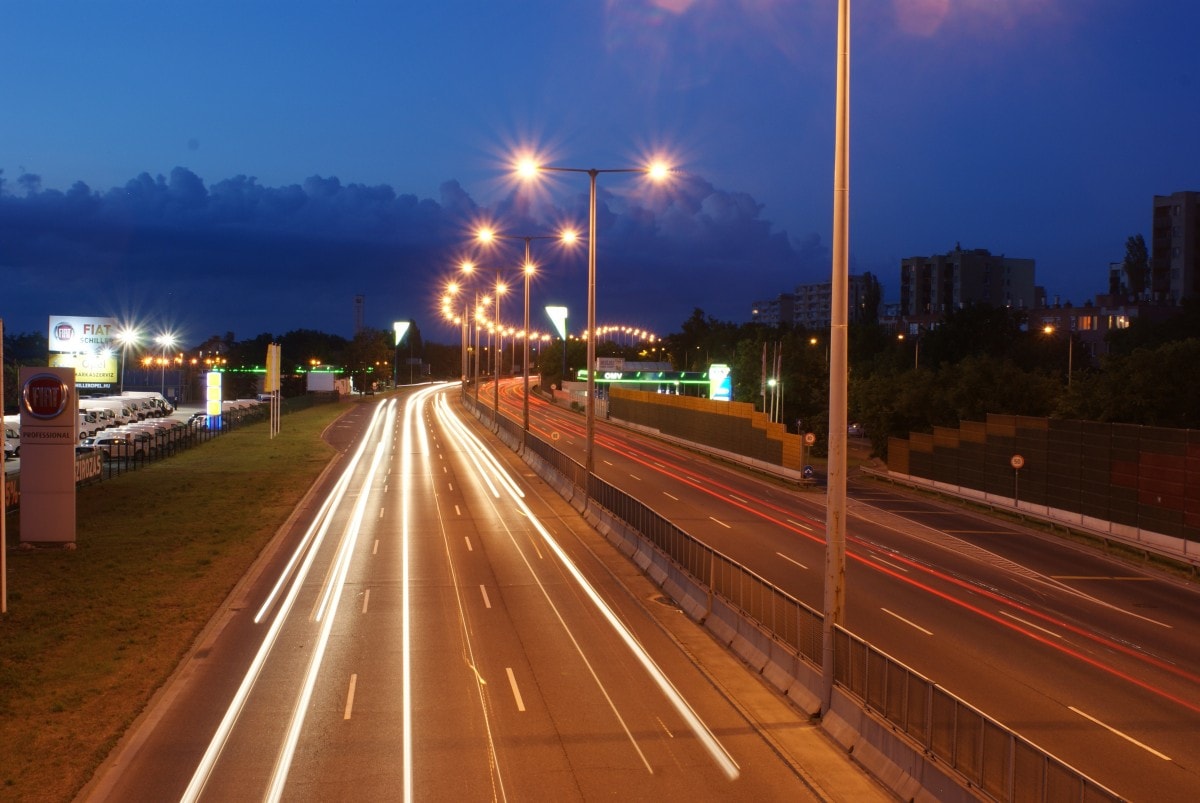
Roadway Lighting Design
AMD Engineering specializes in the development of lighting layouts, electrical/control system layout and design with voltage drop calculations, and coordination with electrical service providers to support lighting systems for streets, roadways, intersections, interchanges, underpasses, signs, sidewalk/trails, commercial sites, parking lots, and other areas where lighting is desired. AMD Engineering evaluates each project and determines the lighting objectives, whether lighting is required for vehicular considerations only or if lighting for pedestrians and/or bicycles must also be considered. AMD Engineering's principals and support staff are fully knowledgeable of State and Local standards and specifications including MDOT SHA's Traffic Control Devices Design Manual, VDOT's Traffic Engineering Design Manual, and DDOT's Design and Engineering Manual and develop layouts that achieve all lighting objectives in the most efficient way possible. For projects that may involve the use of non-standard lighting equipment, such as Developer and Contractor projects, AMD Engineering coordinates with locality staff and the Developer/Contractor for selection of the appropriate luminaire and pole considering factors such as cost, ownership/maintenance, and lighting performance.
AMD Engineering has been at the forefront of VDOT's shift to partial interchange lighting under IIM-TE-390. Our principals led the first-of-its-kind I-66 Lighting Safety Study that set partial interchange lighting limits for the 22.5-mile I-66 Outside the Beltway corridor, and AMD was the first firm to submit plans under the new criteria. We now apply the same approach on the I-81 Widening CIP and provide lighting design for the Hampton Roads Bridge-Tunnel Expansion portal islands.
For photometric analyses, AMD Engineering coordinates with the agency to review design standards such as IES RP-8 Roadway Lighting Guidelines and the AASHTO Roadway Lighting Design Guide and considers factors such as roadway classification, geometry, and pedestrian activity to determine the appropriate lighting design criteria (average maintained or minimum values and uniformity ratios) and calculation method (luminance or illuminance). A site visit is completed to verify characteristics of any existing lighting equipment in the project limits that is to remain and must be considered for the photometric analysis. The calculations consider the light source, distribution, and mounting height to determine the spacing of poles. Photometric analysis is completed using AGi32 and documents the achieved values and uniformity ratios to verify that design criteria are satisfied.
AMD Engineering prepares preliminary roadway lighting/site lighting/highway lighting plans at a scale of 1"=25' or 1"=50', depending on the size and complexity of the project, to obtain a consensus on the general lighting layout prior to the development of detailed plans and electrical design. These plans depict existing and proposed site conditions, geometry, utilities, right-of-way, traffic barrier, existing and proposed light pole locations, power feeds, lighting control equipment and any other features that may affect the lighting design. We also begin coordination with electrical service providers to verify availability of desired service types (size and voltage). We also understand that streetlights maintained by the local electric utility are common in some areas and that more detailed coordination may be required in the design of these systems or to address construction impacts to existing lighting.
Following an approved lighting layout, AMD Engineering develops final roadway lighting/site lighting/highway lighting plans in conformance with local Standards and Specifications. Additional details such as electrical circuitry and wiring, panel schedule(s), and details for non-standard equipment are added to the preliminary plans. Voltage drop calculations are completed to show that voltage drop does not exceed NEC requirements for any branch circuit. Specifications/Special Provisions are developed as necessary and cost estimates are provided. The final plans and specifications/special provisions are revised in accordance with the final review comments and a final engineer's estimate is prepared.
Project History
- I-81 Widening CIP Partial Interchange Lighting
- HRBT North and South Portal Island Lighting
- I-66 Outside the Beltway Partial Interchange Lighting and Construction-Phase Services
- I-66 Outside the Beltway Continuous Lighting*
- I-66 Express Lanes Park & Ride Lighting*
- Capitol Crossing (I-395 Air Rights), Washington, DC*
- DDOT New Jersey Avenue Two-Way Conversion*
- USACE HEC Access Road*
* Projects managed and/or designed by principals while at previous firms
Ready to start your project?
Contact Us